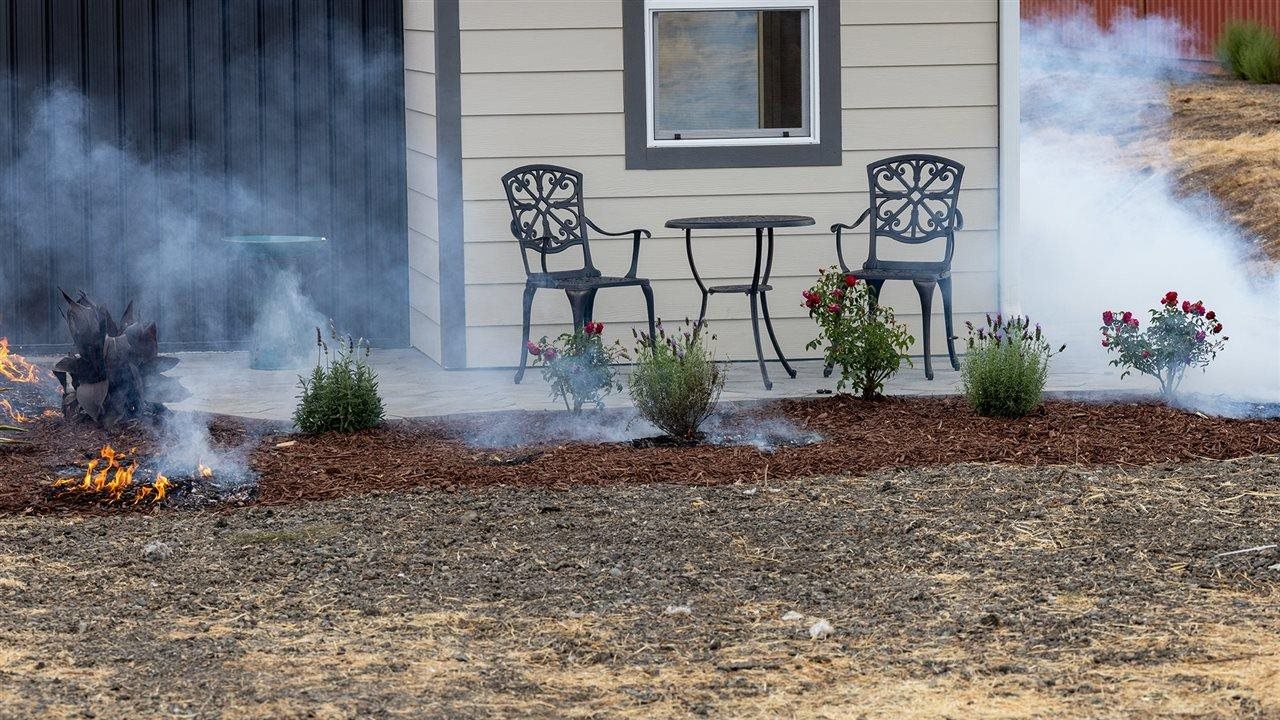
More communities across the country are facing wildfire risk than ever before. While the West remains especially vulnerable, many states have experienced significant fire activity in recent years. As this threat grows, it is increasingly important for homeowners to understand how to reduce their home's vulnerability and better protect their property.
To help homeowners take action, the Insurance Institute for Business & Home Safety (IBHS) developed the free Wildfire Ready guide, which offers practical, science-backed steps informed by years of research and full-scale testing.
Understanding How Wildfires Ignite Homes
When people think about wildfire damage, they often picture a wall of flames. In reality, many homes ignite long before the main fire arrives.
The greatest wildfire risks to homes come from three primary threats:
- Embers
- Radiant heat
- Direct flame contact
Of these threats, wind-blown embers are the leading cause of home ignitions. Embers can travel for miles ahead of the fire front and ignite vulnerable areas such as roofs, gutters, vents, decks and combustible materials near the home. That is why reducing opportunities for ember ignition is one of the most effective ways to improve a home's wildfire resilience.
Steps to Help Protect Your Home
Your best defense is to be proactive with a plan that addresses vulnerabilities around your entire property.
The First 5 Feet Around Your Home
The area within 5 feet of the home is critical because it is where embers are most likely to ignite combustible materials. Homeowners can reduce this risk by taking a few key steps in this critical area:
- Create a noncombustible zone around the home's perimeter by removing mulch, vegetation and other combustible materials, such as trash cans.
- Maintain at least 6 inches of noncombustible clearance at the base of exterior walls.
- Replace combustible fencing attached to or located near the home with noncombustible materials such as metal.
Roof, Gutters and Vents
- Install a Class A fire-rated roof.
- Keep roofs and gutters free of leaves, pine needles and other debris.
- Replace plastic or vinyl gutters with metal gutters.
- Install ember-resistant vents with 1/8-inch mesh screening.
The Area Beyond the First 5 Feet
- Maintain defensible space from 5 to 30 feet around the home.
- Trim and manage vegetation, including tree branches that overhang the home.
- Don't overlook outbuildings. Give sheds, ADUs and other structures the same wildfire mitigation attention as the home itself.
No single action can eliminate wildfire risk. The IBHS Wildfire Ready guide provides a practical set of actions that work together to reduce vulnerabilities and strengthen a home's overall protection.
Learn how to create a wildfire-prepared home, neighborhood or multifamily property at WildfirePrepared.org.


