
Sponsored by argenx
Adults living with chronic inflammatory demyelinating polyneuropathy, or CIDP, may be eligible to participate in one of two Phase 3 clinical studies evaluating an investigational study drug*. The studies, EMVIGORATE and EMNERGIZE, are enrolling adults ages 18 and older who have been diagnosed with CIDP, at select study sites across the United States.
About CIDP
Chronic inflammatory demyelinating polyneuropathy, commonly known as CIDP, is a rare, long-lasting autoimmune disease that can worsen over time. Today, there are approximately 60,000-77,000 people in the U.S. living with CIDP. The condition occurs when the immune system mistakenly attacks the protective covering of certain nerve cells in the arms and legs. This damage can interfere with nerve signaling and lead to progressive symptoms that affect mobility and everyday functioning.
For many people, CIDP can make simple daily activities increasingly difficult. Symptoms and disease severity can vary from person to person, but the condition may lead to difficulty walking, climbing stairs, maintaining balance, or performing routine tasks independently. If left untreated, CIDP can have a significant impact on mobility, independence, and overall quality of life.
"We often hear from the CIDP community that symptoms like fatigue, pain, and the loss of independence are even more challenging because they are not visible to others, even to those closest to them," said Lisa Butler, President and CEO, The GBS|CIDP Foundation International. "Living with chronic 'invisible' symptoms can have a profound impact on relationships, how seriously their condition is considered by others, how quickly they get diagnosed, and how supported they feel throughout their journey."

Understanding the impact of CIDP
CIDP can be difficult to diagnose because its symptoms may look like those of other nerve or muscle conditions. As a result, some people may experience delays in diagnosis or may initially be misdiagnosed.
Because CIDP is rare and complex, the disease may not look the same for everyone. Some people may have periods when symptoms improve and then return, while others may experience symptoms that slowly get worse over time. Early diagnosis and appropriate care are important to help reduce the potential for disease progression and long-term disability.
"Advancing our understanding of CIDP depends on clinical research. By studying this rare and complex disease, researchers can continue to build the scientific evidence needed to evaluate potential future treatment approaches." – Arjun Seth, MD, Assistant Professor at Feinberg School of Medicine, Northwestern University

Clinical trial opportunities
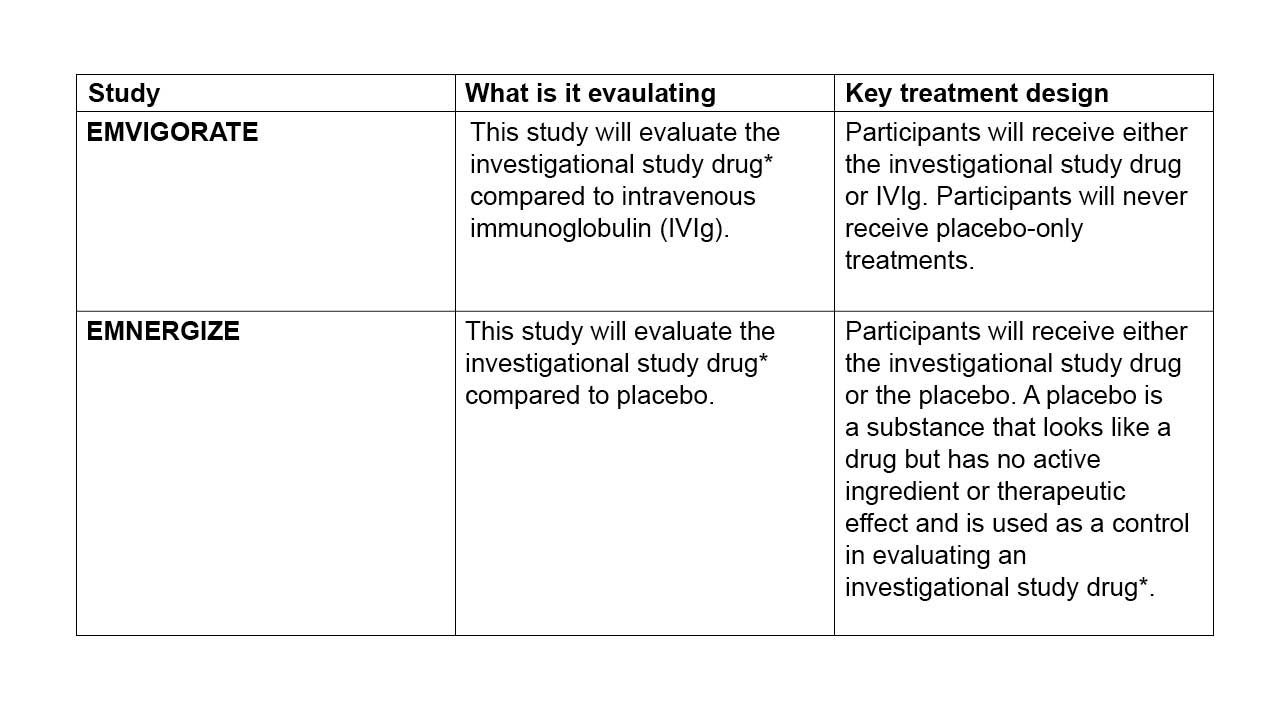
Researchers are currently enrolling adults living with CIDP into two ongoing Phase 3 clinical studies: EMVIGORATE and EMNERGIZE.
Both studies are evaluating how the investigational study drug* may work (also known as efficacy) and whether it is safe for the use of adults living with CIDP. The overview below provides additional information about each study, including who may be eligible to participate and what participation may involve.
Who may qualify?
Individuals may be able to participate if they:
- Are 18 years of age or older
- Not pregnant or actively trying to get pregnant
- Diagnosed with CIDP
Additional eligibility criteria apply. If you are interested in participating, please speak with your treating physician. If appropriate, they can refer you to the study team, who will review the full eligibility requirements and answer any questions about participation.
What participation may involve
Participation in a clinical research study generally begins with a discussion with your treating physician of the study and review of an informed consent form before any study procedures take place. Individuals may undergo screening assessments to determine eligibility and, if enrolled, may receive study treatment through intravenous (IV) infusion. Participants will also attend clinic visits, complete health assessments, and be monitored throughout the study to help researchers evaluate safety and study progress.
The study team will provide detailed information about study procedures, visit schedules, and participant responsibilities during the screening process.
Why clinical research matters
Clinical research helps researchers evaluate the safety and effectiveness of an investigational study drug. The findings of the studies are assessed by health authorities.
If you or someone you care about is living with CIDP, we encourage you to learn more about these clinical research opportunities and talk with your treating physician about whether participation in a clinical study may be right for you.
To learn more about these studies and find a study site near you, visit:
You can also search ClinicalTrials.gov for:
- EMVIGORATE: NCT06920004
- EMNERGIZE: NCT07091630
*The investigational study drug, empasiprubart, is not approved by any regulatory agency for use in CIDP. Its safety and effectiveness have not been established.


