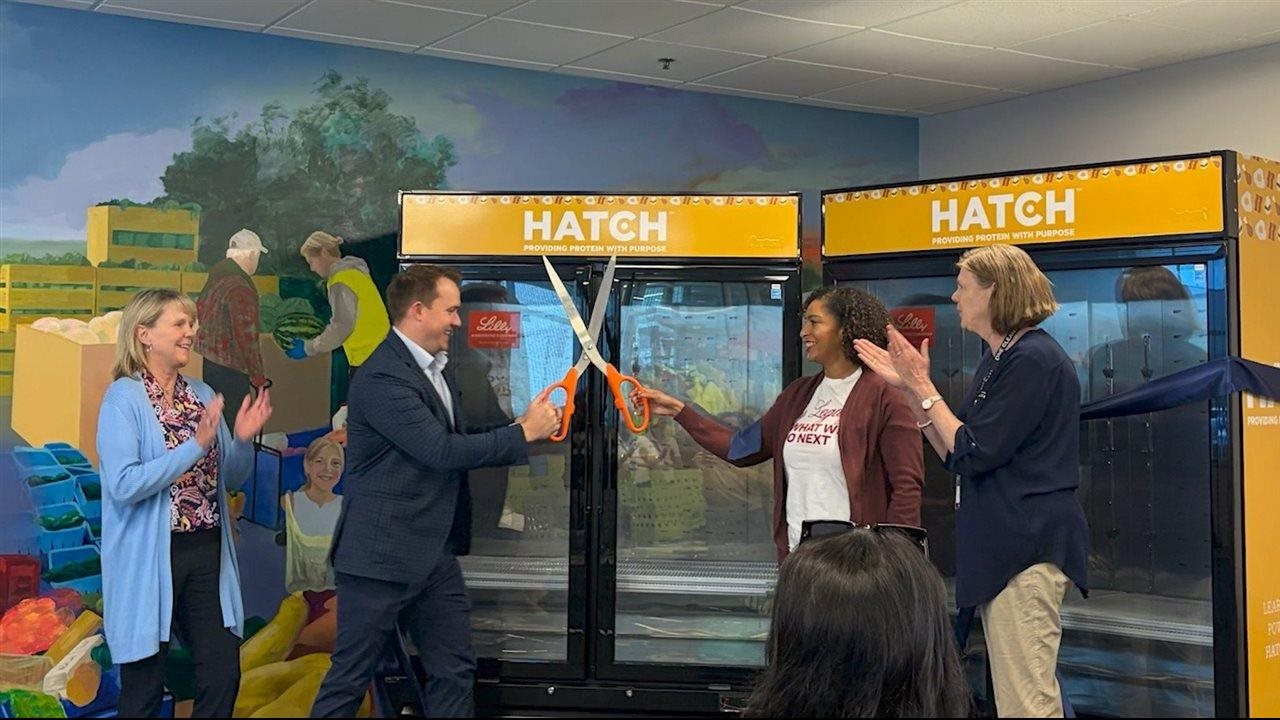

Access to fresh, nutrient-dense food is critical to a person's well-being, affecting practically every aspect of health, from supporting a child's development1 to reducing a person's risk of chronic disease2. Unfortunately, for millions of families across the country, access to nutritious food remains out of reach.3
Medicine-maker Lilly believes that nutrition is a cornerstone of community health. The medicine company has a long history of supporting organizations that are deeply rooted in the communities they serve, including local United Ways.
This year, Lilly turns 150, and to celebrate this milestone anniversary, it's doubling down on its commitment to improving the health of communities nationwide by ensuring families have access to a key nutrient: protein.
The cold storage problem
Food pantries and community organizations nationwide work tirelessly to meet the needs of hungry families. Expanding access to nutritious food, especially protein such as meat, eggs and dairy, depends on the right infrastructure to store and distribute it.
Because protein-rich foods require continuous refrigeration, they're among the most challenging items for local pantries to keep on hand. With more cold storage capacity, pantries can stock — and extend — the shelf life of fresh, protein-rich foods, helping more families access the nutrition they need.
Anchoring the solution in community
Addressing food insecurity requires a two-pronged approach: supporting food access today while planning for tomorrow. Across the country, Lilly is supporting United Way to identify local community organizations that are making a meaningful difference by expanding access to nutritious food and strengthening local food systems. Together, this initiative will help provide the equivalent of 500,000 meals across 15 communities in the near term, while also supporting long-term infrastructure improvements — including expanded cold storage capacity with nonprofits like HATCH for Hunger — that will enable the distribution of more than 5 million protein-rich meals annually across 150 food pantries.
The initiative reflects Lilly's belief that food is medicine — and that access to nutritious food makes health possible. Through support of HATCH for Hunger, United Way Worldwide, United Way of Central Indiana, and the Pacers Foundation, the initiative supports two areas of nonprofit work: the community organizations' immediate nutritious food distribution efforts, and HATCH's development of long-term cold storage infrastructure at food pantries that will enable them to store and serve protein-rich meals year-round.
Health begins with what's on your plate
For a parent deciding between rent and groceries, or a family stretching a single meal across multiple nights, nutritious food isn't a lifestyle choice, it's a lifeline. Lilly's initiative is rooted in the belief that when communities have access to the nutrition they need, better health follows.
"As we celebrate 150 years, we wanted to do something that reflects what Lilly has always stood for, which is making health possible for more people," says Melissa Coe, associate vice president of social impact strategy and community engagement at Lilly. "That starts with supporting the organizations that know their communities best, from the pantries to the people who show up for families every day and giving them the tools to do even more. We're honored to be a part of that."
To learn more about this initiative, visit go.lilly.com/food or visit United Way Worldwide at unitedway.org.
Courtesy of Lilly
Sources
1. Gallegos D, Eivers A, Sondergeld P, Pattinson C. Food Insecurity and Child Development: A State-of-the-Art Review. International Journal of Environmental Research and Public Health. 2021;18(17):8990. doi:10.3390/ijerph18178990.
2. Centers for Disease Control and Prevention. Healthy Food Environments. National Center for Chronic Disease Prevention and Health Promotion. Updated January 23, 2025. https://www.cdc.gov/nutrition/php/healthy-food-environments/index.html.
3. Matthew P. Rabbitt, Madeline Reed-Jones, Laura J. Hales, Shellye Suttles, and Michael P. Burke, Household Food Security in the United States in 2024, ERR-358, U.S. Department of Agriculture, Economic Research Service, December 2025, p. 11.


