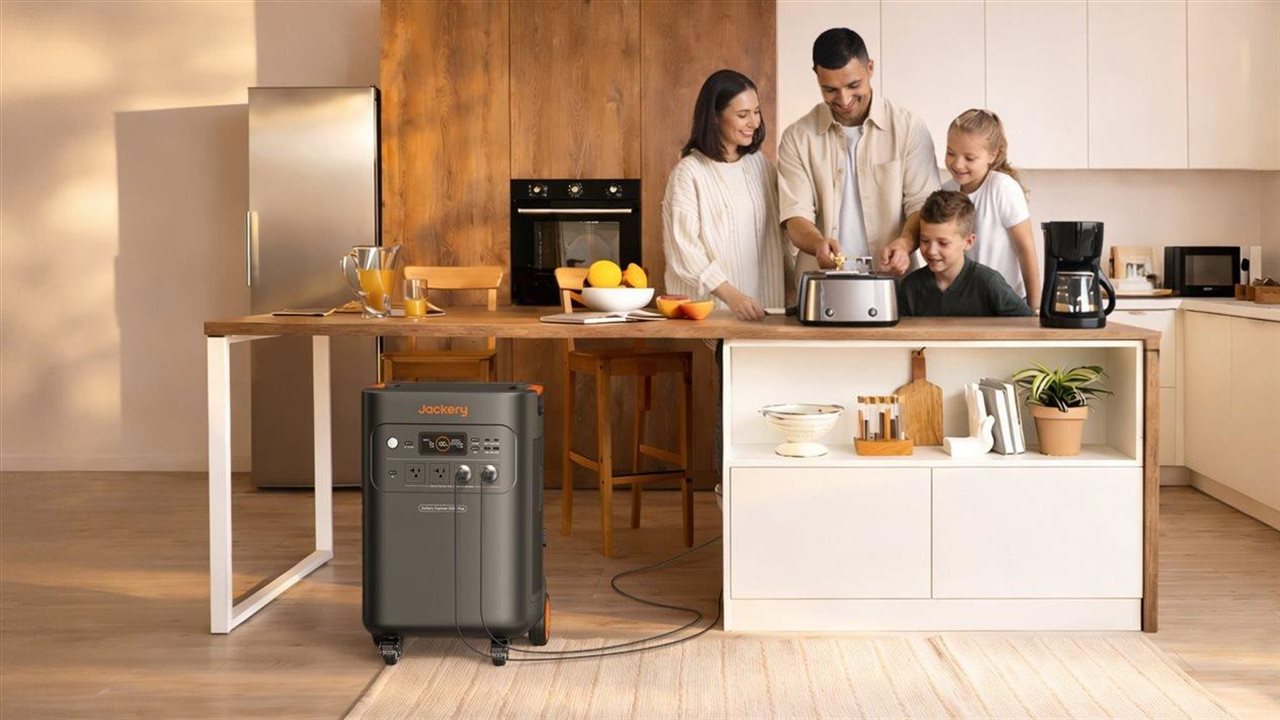
Having backup power isn't just for emergencies anymore. Today, homeowners and renters should consider using a home battery system (like a solar generator) as backup power to run their daily appliances and devices.
That said, not everyone knows what a home battery is, let alone how it works. If you count yourself in that group, don't worry. This is your essential guide to learning why you need backup power, how a home battery backup system works and how to choose the right system for your household.
Why backup power is important now more than ever
When you use electricity, you're pulling energy from your local grid. That means when a power outage happens and you don't have backup power, you'll have to wait until the local grid is restored, which can take days to weeks during an emergency.
If you don't live in a disaster-prone area, you may assume that you don't need backup power. However, as electricity prices continue to rise across the country, finding ways to reduce your reliance on the grid is essential for lowering your utility bill.
While lowering your overall energy consumption can make a difference, that's not the only factor that decides how much you'll pay for each billing cycle. How much you're charged for using power from your local grid depends not only on where you live but also on when you use it.
Off-peak hours (typically overnight and early morning) are the cheapest times to use electricity. On the other hand, peak hours (late afternoon through evening, when demand spikes) can run two to three times more expensive than off hours.
Most households have no choice but to pay whatever the grid charges whenever they need it. That said, a simple way to reduce your reliance on the grid and lower your utility bills is to use a home battery to power your essentials.
How a home battery works
A home battery acts like a barrier between your home and the power grid. It plugs directly into your existing electrical system to optimize daily energy use and provide backup power during a grid failure. It does this by drawing power from the grid or your solar panels and then strategically distributing it to your house.
You don't need to be an engineer to understand how a home battery works.
When shopping for home battery power storage, you will see two main specifications. Understanding the difference is vital for sizing your system correctly:
First, you need to understand the difference between watts and watt-hours.
Watts (W) measure how much power a device needs at any given moment. Every electrical device comes with a rated power consumption that indicates how much electricity it draws while running.
Watt-hours (Wh) measure the total energy stored or used over time. To calculate watt-hours, you multiply the appliance's wattage by its running hours. So, a 1,000 Wh battery can power a 100 W device for 10 hours.
Next, you need to know what a battery inverter does. A home battery stores energy by drawing from the grid through a standard wall outlet or from sunlight using a solar panel. That energy is stored as direct current (DC) electricity but needs to be converted to alternating current (AC) electricity to power AC-powered home appliances.
That's where a home battery's inverter comes in. The inverter converts stored DC energy into the AC power your home appliances use to function.
So, how do you choose what to power with your home battery? You'll need to choose the essential circuits that you want to power. Most households don't need to power everything during an outage — just the essentials.
Which appliances and home systems you consider "essential" is very much a personal choice. However, some common essentials include the refrigerator, lights, Wi-Fi, phone charging, medical devices and a fan or window air conditioner.
To keep these necessities powered separately from relying on the grid requires an independent energy source, like Jackery's Essential Home Backup line, integrated power systems that combine solar panels, battery backup and smart energy management to power your essentials during an outage and reduce reliance on the electricity grid to lower monthly electricity bills.
How to choose a home backup power system

Now that you know why you need a home battery and how they work, it's time to choose one that best suits your needs.
When looking for a home backup power solution, consider prioritizing solar-powered models.
Compared to traditional gas generators, solar power solutions have a clear advantage. Because they store energy from sunlight, there's no fuel to store, and when energy is used, you won't have to deal with fumes, noise or major maintenance.
After purchase, your operating costs for a solar generator costs $0/kWh because sunlight, its power source, is free. On the other hand, gas generators cost approximately $0.73/kWh to operate, adding up to roughly $78,012 over 25 years, versus approximately $39,434 for a solar system over the same period.
When choosing a home backup solution, you'll also need to determine the size of the system you need to meet your needs. Generally speaking, backup power falls into one of three categories:
Ultra-portable: Small, ultra-portable power solutions are great for camping and device charging, but are not designed for home circuits.
Full ESS (energy storage system): This whole-home backup system integrates with your utilities for powerful backup. However, full ESS can be expensive and complex, and it requires professional installation. It's not practical for most households, and off the table entirely for renters.
Essential home backup: An essential home backup solution, like the Jackery Solar Generator 5000 Plus or HomePower 3600 Plus, powers what matters most to you during a home outage or for everyday use. You won't need a contractor, permits or utility coordination to start, unless you opt for Smart Transfer Switch or Manual Transfer Switch installation. Otherwise, these models are a simple plug-and-play operation accessible for renters and homeowners alike. In other words, an essential home backup solution is the sweet spot for home backup.
Finding the sweet spot
When it comes to balancing power and flexibility, consider one of Jackery's Essential Home Backup solutions to power your devices every day, not just during an emergency but as a money-saving tool.
One of the most attractive features of Jackery's Essential Home Backup solutions is that it automates the time-of-use process. The system reads your rate schedule and works in three automatic phases:
- Midnight to 9 a.m. (off-peak): Charges from the grid at its lowest rates to power your home and top off your battery storage.
- 9 a.m. to 4 p.m. (solar harvest): Captures sunlight to power your home in real time. Surplus energy is stored automatically — pure power at near-zero cost.
- 4 p.m. to 9 p.m. (peak performance): Disconnects from the grid entirely during its most expensive hours. Your home runs on what you stored — seamless power, near-zero cost.
In short, when you use this type of home backup system, you're buying electricity when it's cheap, generating it for free when the sun is up, and avoiding the grid completely when rates peak.
Are you ready to lower your electricity bill and regain energy independence? To learn more about solar home backup solutions, visit Jackery.com.


