
On any given day, Regina Karchner, MSW, LICSW, Social Worker at the Children's Brain Tumor Foundation, meets with families at very different points in their journey. Some have just heard the words "brain tumor" for the first time. Others have been living with a diagnosis of pediatric low-grade glioma, or pLGG, for years. What connects them is not just the medical condition, but the way it reshapes daily life in ways few people on the outside fully see.
"While the shock of a brain tumor diagnosis is often acknowledged, the practical and emotional support families need in those early days doesn't always follow," says Regina. "Many families are left searching for someone who can slow down, answer questions and help them process what this diagnosis means for daily life."
pLGG is the most common type of brain tumor in children. It is considered slow-growing, but its effects can be significant, depending on where the tumor develops in the brain. Some children experience vision problems, loss of balance or changes in energy levels. Others may face mood disorders or seizures.1
From a clinical standpoint, the course of pLGG varies as well. Some tumors remain stable and are monitored through routine imaging. Others require surgery or targeted treatment.1 But the one constant across all of those impacted is that the experience extends far beyond what happens in a hospital or clinic.
"What many people don't realize," Regina explains, "is that this is often a long-term condition. Families aren't just dealing with a diagnosis. They're learning how to live with ongoing uncertainty."
Much of the pLGG experience happens between appointments. There are the waiting periods between scans, when anxiety can quietly build. There are school days missed for appointments, and the challenge of helping teachers and classmates understand what a child is going through. There are shifts at home, as parents balance caregiving with work and siblings adjust to changes in attention and routine.2
For children, the emotional impact can be just as significant as the physical.2
"Even when children are able to return to school or social activities, many continue to struggle to make sense of something that's hard for even adults to process," Regina says. "Challenges aren't always visible, but they can affect friendships, participation in class and how children see themselves."
This is where support and resources become essential. In addition to needing help to process the emotional weight of diagnosis, families also need practical support. That can include financial resources, coordination with schools or having conversations with children about their condition in an age-appropriate way. These needs constantly change as a child's journey continues.
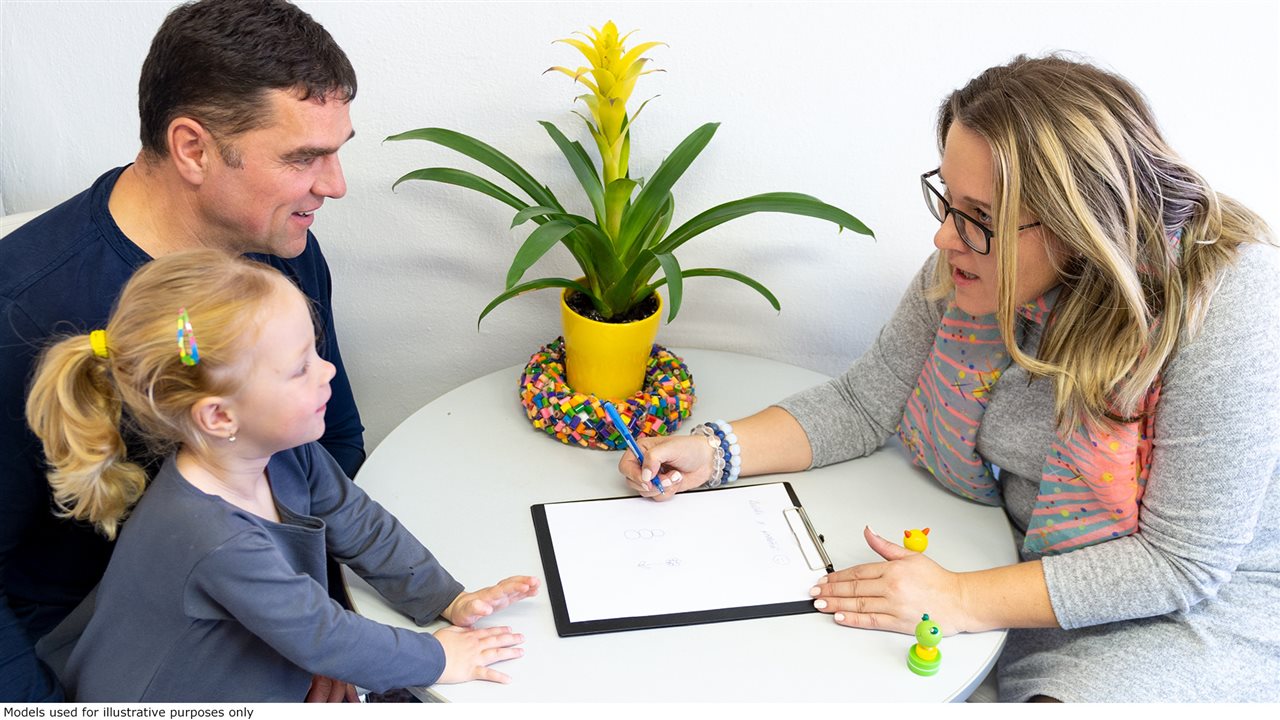
That's why it's critical that patients and families have access to a care team — not just a single point of contact. Social workers, Child Life Specialists and other care team members often collaborate closely with doctors and nurses to provide holistic care for the child and their family. In addition to treatment, the broader team focuses on helping children understand and cope with medical experiences and support the emotional and logistical needs of the entire family.3
Together, this network helps families navigate not just treatment, but the realities of everyday life with pLGG.
One of the most common challenges families face is isolation. Because pLGG can be a long-term condition, families may feel like others don't fully understand what they are going through.2
Access to resources can help bridge that gap. Educational materials can make it easier for parents to explain the diagnosis in a way their child can understand. Support communities offer a sense of connection with others on a similar path.
Additional tools are designed specifically for children and families, including books that help explain pLGG in age-appropriate ways and provide guidance for navigating uncertainty.
"I've seen how much it helps when families feel that they're not alone," Regina says. "Even small moments of understanding and connection can ease the burden. I encourage anyone navigating a pLGG diagnosis to seek out trusted resources and support networks that can help them feel informed, supported and less isolated."
For more information on pLGG and resources for families, visit rethinkplgg.com.
Sources:
- What is pediatric low-grade glioma (pLGG)?. rethink pLGG from Day One Biopharmaceuticals. (2026). https://www.rethinkplgg.com/about-plgg
- Pediatric Brain Tumor Foundation. (2024, July 17). Voice of the Patient Report. Cure the Kids. https://curethekids.org/wp-content/uploads/2024/08/PBTF-pLGG-Voice-of-the-Patient-Report.pdf
- Scialla, M. A., Canter, K. S., Chen, F. F., Kolb, E. A., Sandler, E., Wiener, L., & Kazak, A. E. (2017). Implementing the psychosocial standards in pediatric cancer: Current staffing and services available. Pediatric Blood & Cancer, 64(11). https://doi.org/10.1002/pbc.26634


