
Whether you've just finished prepping your holiday meal or have just enjoyed the last drop of milk, don't throw out your food and beverage cartons! These cartons, made mainly from renewable materials, are also recyclable!
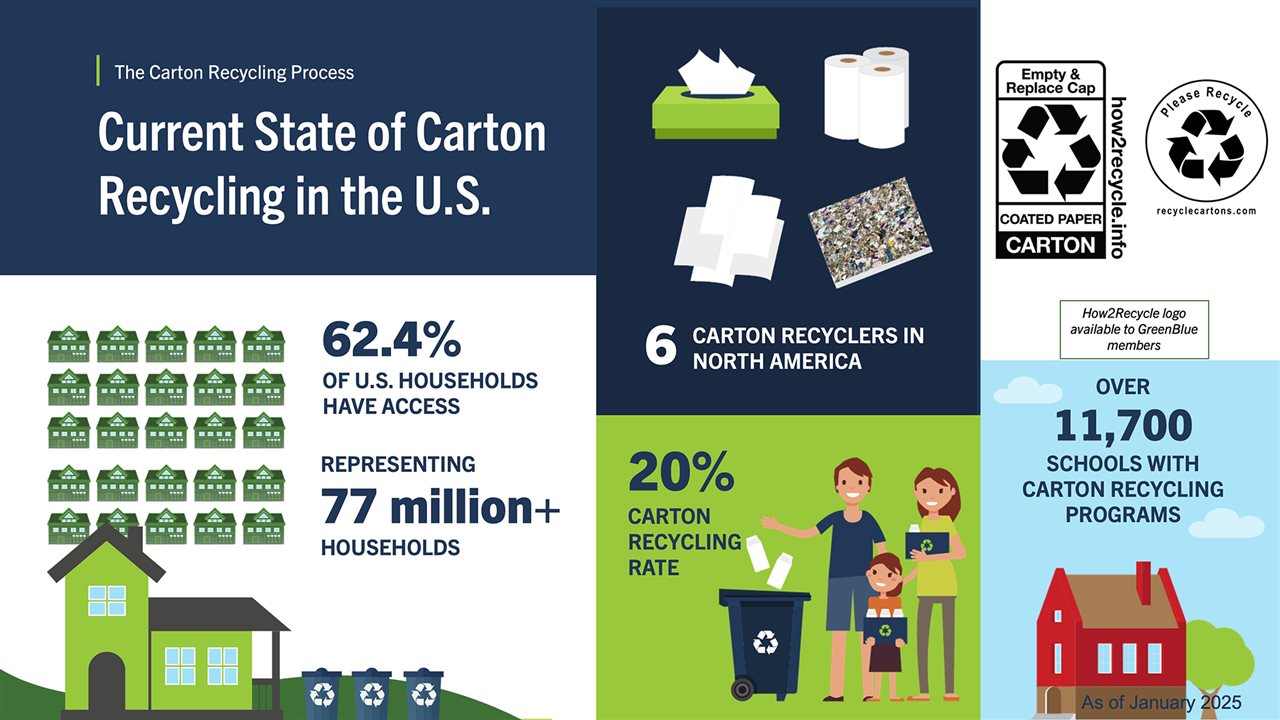
Thanks to educational efforts and expanded access to recycling programs, more and more Americans are able to recycle food and beverage cartons. According to Tetra Pak, a leading carton manufacturer and a founding member of the Carton Council, U.S. carton recycling access has more than tripled since 2009. In fact, 62% of U.S. households have access to carton recycling today.
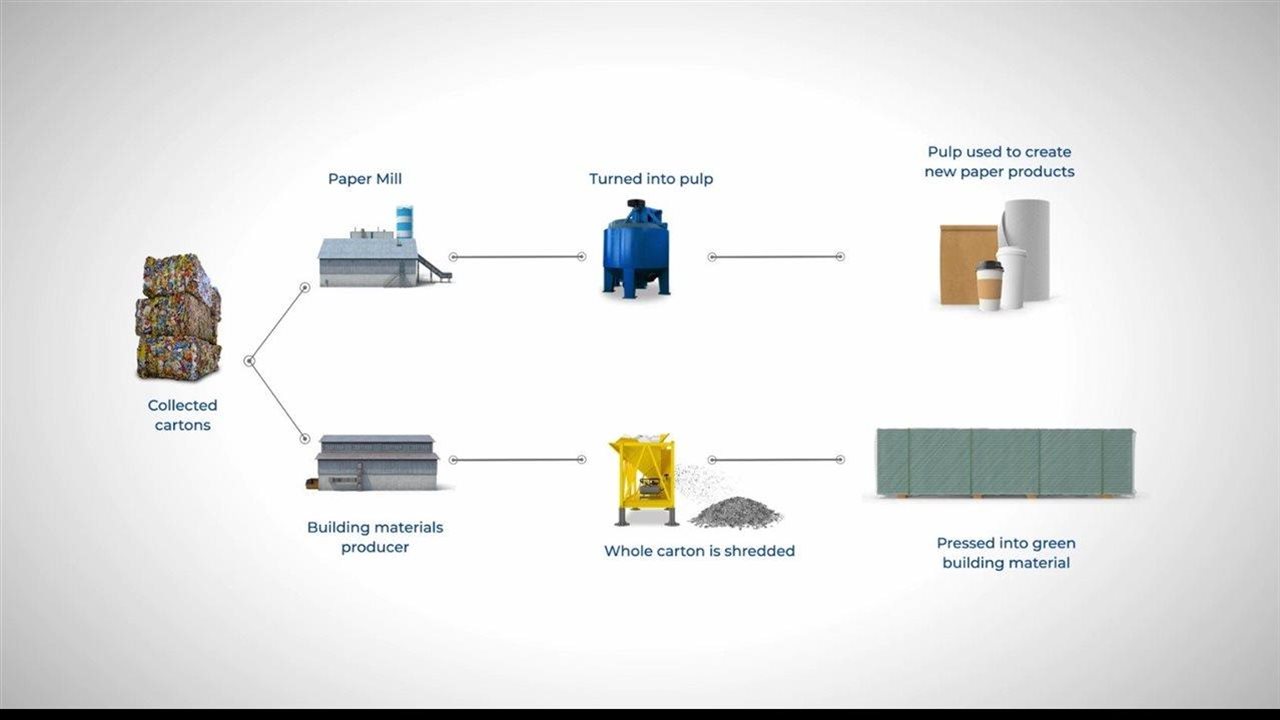
After they're collected and sorted, cartons can go on to have a second life as tissues, paper towels and writing paper or as high-performance building materials, such as roofing cover board. But how does this happen? Read on to discover what happens to recycled cartons after you've put the bin out on the curb.
A new lease on life
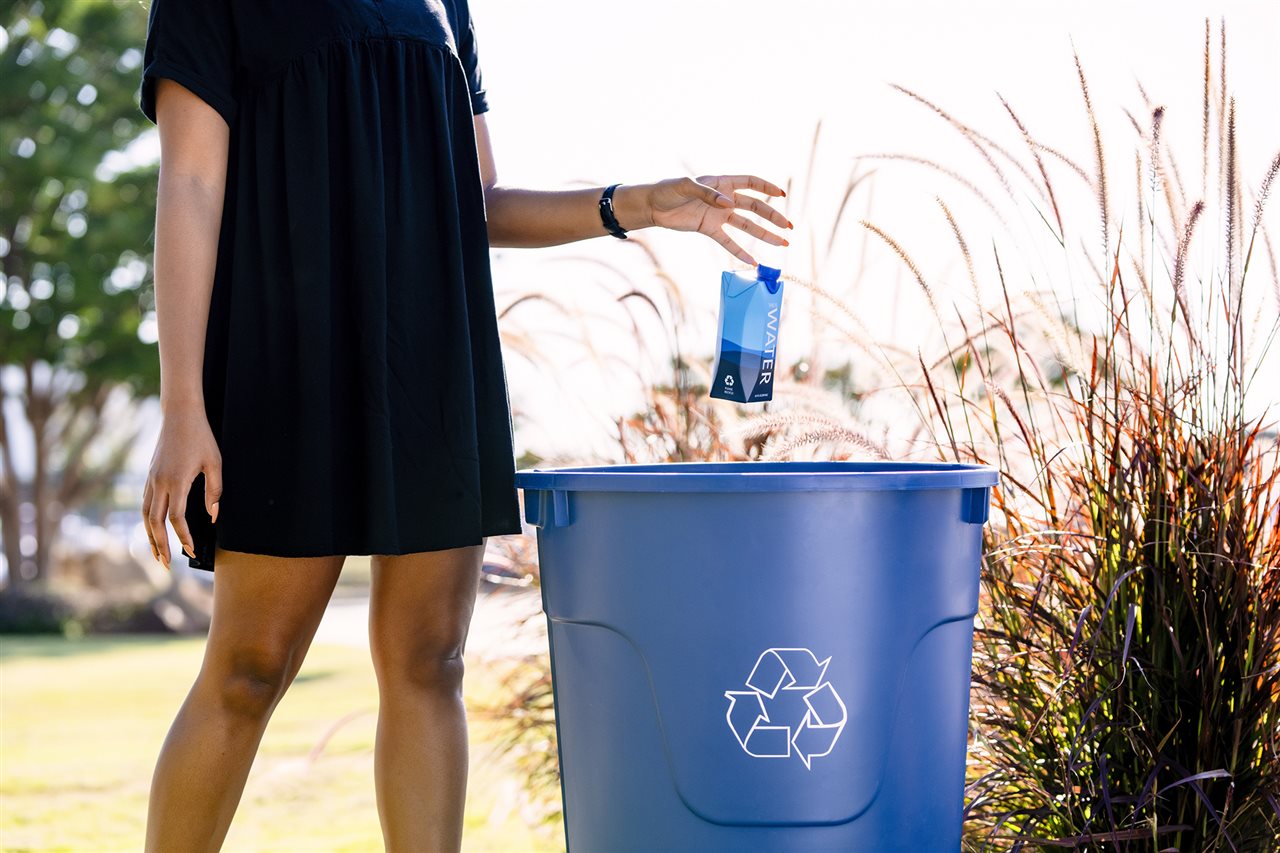
Your food and beverage carton's journey to becoming a new product starts at pickup. After a hauler collects your recyclables, they'll take them to a local material recovery facility (MRF). At the MRF, your recyclables are sorted to ensure they go to the right place.
Using a combination of manual sorting, robotics and optical technology, nonrecyclable items (like hazardous materials, plastic bags and clothing) are removed and the remaining materials are separated into glass, paper, plastic, aluminum, cartons and other categories. If you want to see the process up close, visit your local facility. Many MRFs will allow you to schedule a tour to see recycling in action in your community!
Once the food and beverage cartons are sorted, they are bundled into bales with other cartons or sometimes with mixed paper products. From this point, your cartons take one of two journeys.
Some baled cartons are purchased by paper mills where they are pulped to be turned into new paper products like paper towels, toilet paper, writing paper, tissues, coffee cups, to-go containers and other paper-based products you use every day.
Bales made entirely of food and beverage cartons also may be turned into building materials. This process shreds the entire carton and uses heat and pressure to form high-performing building materials. These building materials are used to create a roofing cover board, and they can even be recycled again into the same product when it's time to replace the roof!
There are several North American facilities that purchase bales of recovered cartons to turn into new products. In other words, the carton you place in your recycling bin might become the printer paper at your office or roof over your head at a big-box store or local food chain!
Does my community have a recycling program?
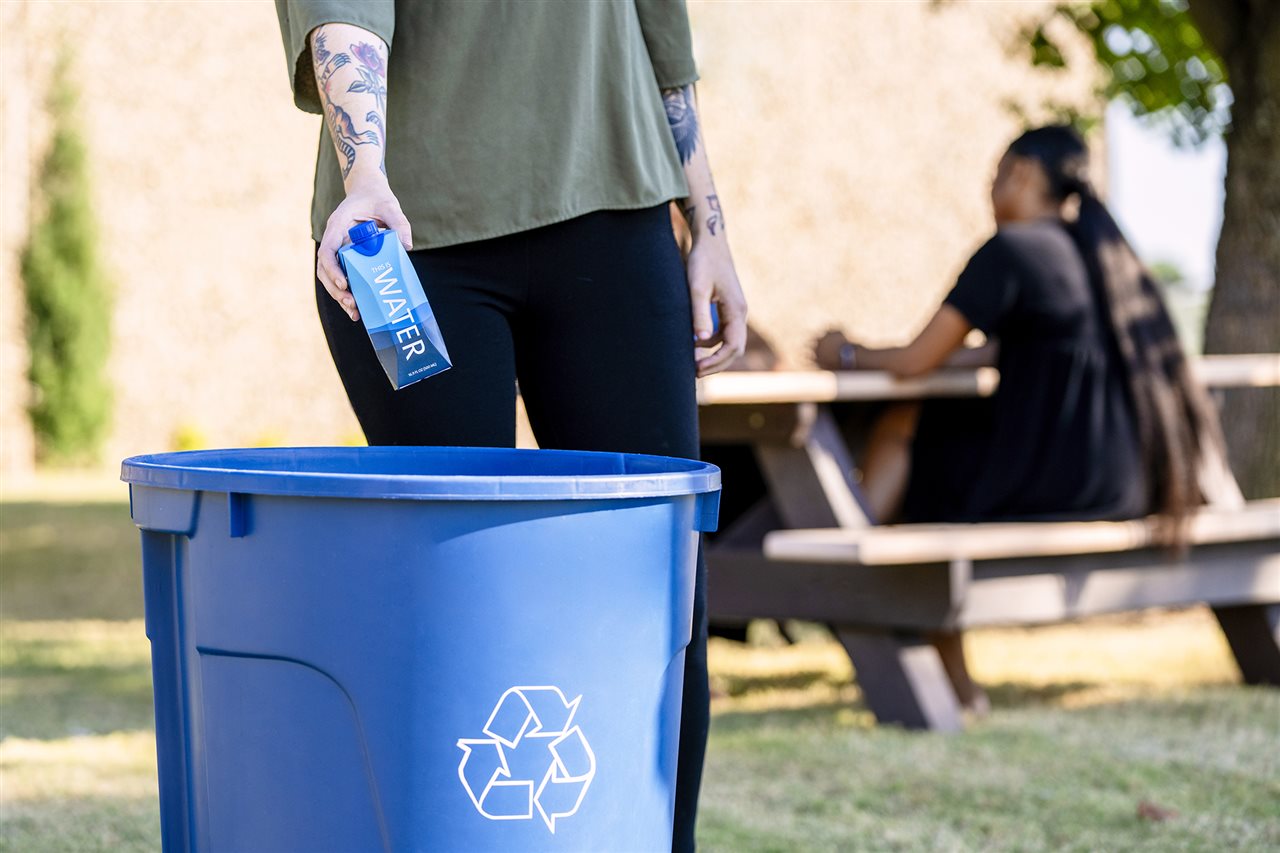
Cartons are widely recyclable across the country, so there's a good chance that your community has a recycling program so your food and beverage cartons can start their new life as another product.
If you're curious, you can look up details about your community's recycling program by using the Carton Council's Carton Recycling Address Locator. All you have to do is type in your address to find out if your area collects food and beverage cartons.
Want to know more? Visit www.tetrapakusa.com to learn more about food and beverage carton recycling.