If you've tried to schedule a doctor's appointment lately, you know the drill: "Our next available opening is in six weeks." Or eight. Or three months. It's not that your doctor's office is disorganized—they simply don't have enough physicians to meet demand.
The wait times are a symptom of a larger problem. Healthcare experts project the U.S. will be short nearly 187,000 physicians by 2037, including 87,150 primary care doctors, 8,650 cardiologists, and thousands of specialists in fields like anesthesiology and obstetrics.
For communities already struggling to attract physicians, especially in rural areas, the shortage means longer wait times and reduced access to care. It also means there is an opportunity for those wanting to pursue their medical degrees.
The Challenge of Getting In
If you've been considering medical school—or know someone who is—getting in isn't easy. Thousands of qualified candidates don't secure a seat at U.S. medical schools each year, despite meeting academic requirements.
But the medical education landscape has more options than many prospective students realize.
Beyond Traditional Programs
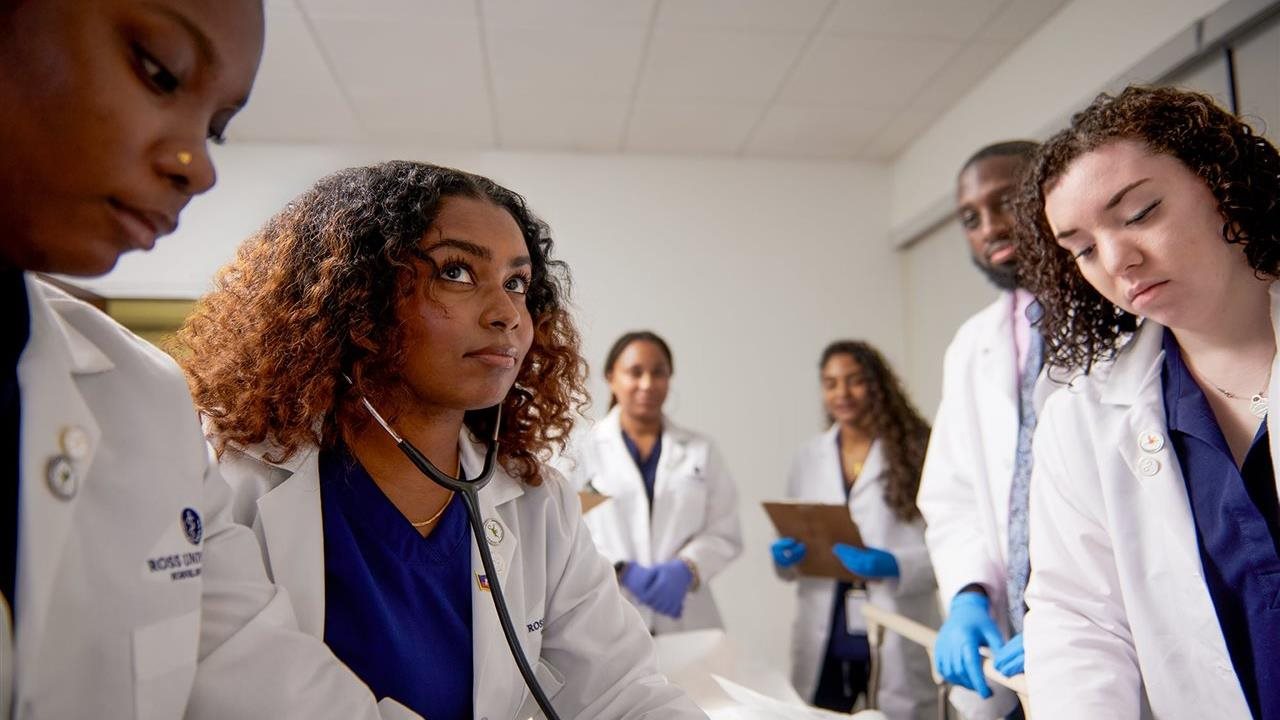
The U.S. faces a critical physician shortage, with limited medical school seat capacity constraining the pipeline of new doctors. Schools like Ross University School of Medicine and American University of the Caribbean School of Medicine help address this gap by expanding access to medical education and contributing significantly to the physician workforce, both schools having a combined 95% first-time residency attainment rate for 2024-2025i.
These programs offer something many U.S. schools don't: three start dates per year instead of one, giving applicants more opportunities to start their medical school journey throughout the year.
"We're seeing strong interest from people who are already working in healthcare—medical scribes, CNAs, EMTs—who want to advance their careers but face limited education options stateside," said Scott Liles, who oversees the medical and veterinarian segment at Adtalem Global Education, which operates Ross University School of Medicine and American University of the Caribbean School of Medicine.
Recent graduates from these programs have secured residencies across major specialties, with more than 40% completing their training in medically underserved communities where doctors are needed most.
New Pathways Opening
Some healthcare employers are creating direct pipelines to medical school. ScribeAmerica, which hires medical scribes nationwide, recently partnered with Adtalem to help employees pursue medical degrees, offering layered scholarship support that can cover tuition, travel, preparatory coursework and application fees.
The company found that three-quarters of its approximately 10,000 employees want to become physicians or other healthcare providers—people who already work in clinical settings and understand the demands of patient care.
"We've spent over 20 years focused on solving provider shortages, and part of that is creating pathways for our employees who want to advance in healthcare," said Tony Andrulonis, CEO of ScribeAmerica. "This partnership gives people who are already committed to the field a direct route to medical school, which helps address one of healthcare's biggest challenges."
For anyone considering medical school, the advice remains consistent: research thoroughly, understand the commitment required, and explore all accredited options. With the physician shortage intensifying, the healthcare field needs qualified candidates willing to step up and care for their communities.
i Percent of students attaining a 2025-26 residency position out of all graduates or expected graduates in 2024-25 who were active applicants in the 2025 NRMP match or who attained a residency position outside the NRMP match


